Intake Process
Intake Process
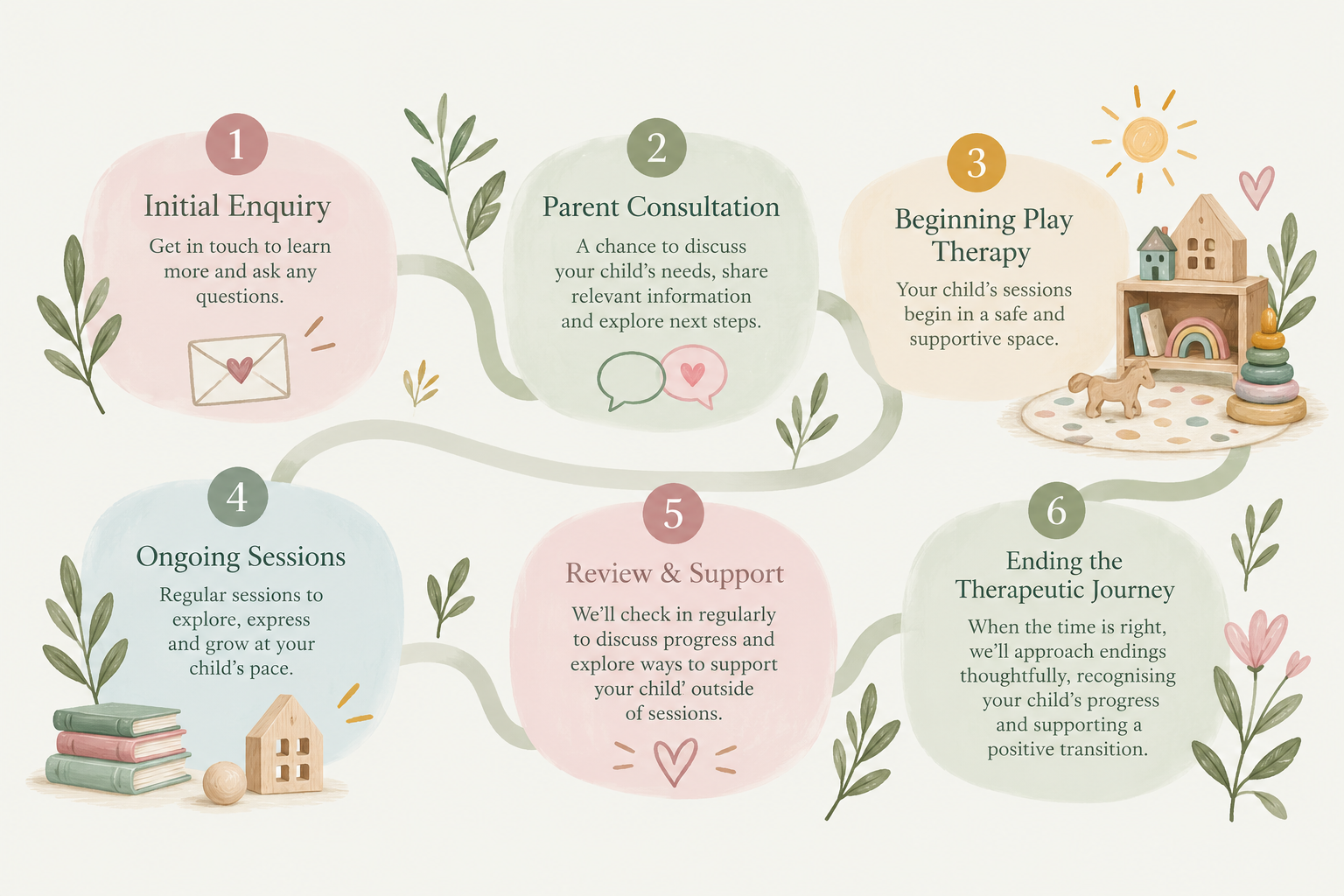
-
The first step is to get in touch.
You can enquire through the contact form on the website, or click here, and provide basic information about your child, why you're considering play therapy, their date of birth, and availability.
You can also send an email to playtherapykatie@gmail.com
-
Before play therapy begins, an initial consultation is arranged with the parent or caregiver.
This provides an opportunity to discuss your child's developmental history, emotional wellbeing, current challenges and any relevant family or school circumstances.
It is also a chance to talk through your concerns, ask questions and discuss what you hope your child may gain from therapy.
This is a paid session.
-
Once it has been agreed that play therapy is suitable, your child's sessions can begin.
The initial sessions focus on helping your child become familiar with the therapy space, the materials available and their therapist.
Building trust and establishing a positive therapeutic relationship is an important part of the process.
Each child is supported at their own pace, without pressure to speak or engage in a particular way.
-
Play therapy is a process, and every child's experience is different.
Sessions provide a consistent opportunity for children to explore emotions, experiences and relationships through play and creative expression.
The number of sessions required will be discussed prior to starting, with a minimum of 12 sessions recommended based on your child's individual needs, and will be reviewed as the work progresses.
-
Parents and caregivers are an important part of a child's support system.
Review meetings will be arranged around week 6 of the therapeutic process to discuss general progress, answer questions and explore ways to support your child outside of sessions.
Your child's privacy and the confidentiality of their therapeutic work will be respected, subject to safeguarding and other relevant professional obligations.
-
When the time comes to finish play therapy, the ending process is approached thoughtfully and at a pace appropriate to the child.
This provides an opportunity to acknowledge their experiences, recognise their progress and support a positive transition from therapy.